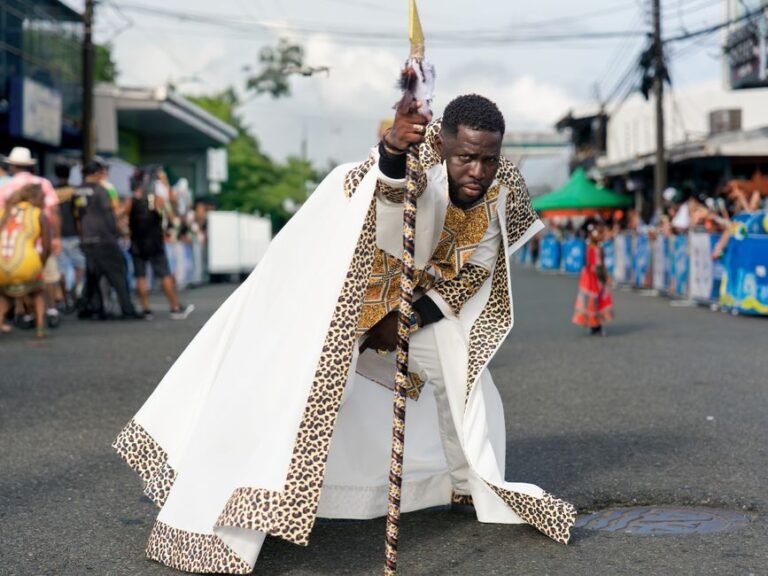
So, you’re looking to capture the energy and emotion of an event with your camera? Great! The core of successful event photography boils down to anticipating what’s next, being ready for anything, and being able to tell a story through your images. It’s less about having the fanciest gear and more about understanding people, light, and movement.
Preparation is key. You wouldn’t show up to a race without your running shoes, and you shouldn’t show up to an event without the right tools and a game plan.
Essential Camera Gear
While you don’t need a truckload of equipment, certain items are non-negotiable for most event photography scenarios.
Camera Body
A reliable DSLR or mirrorless camera is your foundation. Look for good low-light performance (high ISO capabilities), fast autofocus, and a decent frames-per-second (FPS) rate for capturing fleeting moments. Two camera bodies are ideal – one with a wide lens, one with a telephoto – to avoid constant lens changes and give you a backup in case one fails. If two bodies aren’t an option, a good zoom lens is your next best bet.
Lenses
This is where you’ll get the most versatility.
- Wide-angle zoom (e.g., 24-70mm f/2.8): Perfect for capturing the overall atmosphere, group shots, and tight spaces. The f/2.8 aperture is crucial for low-light situations and creating a pleasing background blur.
- Telephoto zoom (e.g., 70-200mm f/2.8): Your workhorse for candid shots, isolating subjects from a distance, and capturing details without being intrusive. Again, f/2.8 is your friend here.
- Prime lenses (e.g., 50mm f/1.4 or 85mm f/1.4): While they lack zoom, their wider apertures excel in extremely low light and produce beautiful, creamy bokeh. Great for portraits, speeches, or isolating details.
Speedlights (Flashes)
Even if you prefer natural light, a speedlight or two can be a lifesaver.
- On-camera flash: Great for fill light or bouncing off ceilings/walls for a softer effect. Learn to use it off-camera or with a diffuser to avoid harsh direct flash.
- Off-camera flash (triggered wirelessly): For more creative lighting control, especially in darker venues. This allows you to sculpt light rather than just blasting it. Don’t forget light stands and modifiers like softboxes or umbrellas if you plan on using off-camera flash.
Batteries and Memory Cards
Bring more than you think you need. Seriously.
- Batteries: At least 3-4 fully charged batteries per camera body. Events can be long, and cold weather drains batteries faster.
- Memory cards: High-capacity (32GB or 64GB minimum) and high-speed (UHS-II recommended) cards. Better to have several smaller cards than one giant one, as it minimizes risk if a card fails.
Pre-Event Reconnaissance
Walking into an event blind is a recipe for stress. Do your homework.
Client Briefing
Understand what the client wants. What are the key moments? Who are the important people? Are there specific shots they need? What’s the overall mood they’re looking for? Don’t assume; clarify everything.
Venue Scout
If possible, visit the venue beforehand.
- Lighting: Assess natural light sources, window positions, and artificial lighting. Are there spotlights? Dark corners? This helps you plan your camera settings and potential flash usage.
- Layout: Identify key areas like the stage, entrance, catering, and restrooms. Plan your movement path. Where will you get the best angles without being in the way?
- Restrictions: Are there any areas you can’t access? Flash restrictions? Time limits?
Shot List and Schedule
Create a loose shot list based on the client briefing and event schedule.
- Key Moments: Speeches, awards, performances, cake cutting, etc.
- Important People: VIPs, event organizers, family members.
- Ambiance Shots: Wide shots of the venue, decorations, crowd reactions, food, details.
Having a schedule with approximate timings for these moments helps you anticipate and be in position.
For those interested in enhancing their event photography skills and understanding the impact of on-site photo printing, a related article can provide valuable insights. You can explore how on-site photo printing not only captures memories but also boosts brand engagement at events by visiting this link: 5 Reasons On-Site Photo Printing Boosts Brand Engagement at Events. This article delves into the benefits of integrating photo printing services into your event strategy, making it a must-read for photographers and event planners alike.
Technical Skills: Mastering Your Camera
Knowing your camera inside and out allows you to react quickly without fumbling with settings.
Aperture, Shutter Speed, ISO
These three make up the exposure triangle. You need to understand how they interact.
Aperture (f-stop)
Controls depth of field and how much light enters the lens.
- Wide aperture (e.g., f/2.8, f/4): Shallow depth of field (blurry background), more light. Great for isolating subjects.
- Narrow aperture (e.g., f/8, f/11): Deep depth of field (more in focus), less light. Good for groups or wide shots where you want everything sharp.
Shutter Speed
Controls how long the sensor is exposed to light and affects motion blur.
- Fast shutter speed (e.g., 1/250s, 1/500s): Freezes motion. Essential for action shots or preventing blur from camera shake.
- Slow shutter speed (e.g., 1/30s, 1/60s): Creates motion blur. Can be used creatively for a sense of movement, but risky for sharp subjects.
ISO
Controls the camera’s sensitivity to light.
- Low ISO (e.g., 100, 200): Less noise, best image quality. Use when light is abundant.
- High ISO (e.g., 1600, 3200, 6400+): More noise, but allows you to shoot in low light with faster shutter speeds. Learn your camera’s usable high ISO limits.
Focusing Techniques
Fast and accurate focusing is critical for events.
Continuous Autofocus (AI Servo/AF-C)
Your go-to for moving subjects. The camera will continuously adjust focus as the subject moves.
Single-Point Autofocus
For precise focusing on a specific subject, especially in a busy scene. Pair it with back-button focus for more control.
Back-Button Focus
Separates the focus function from the shutter button. This allows you to focus, recompose, and then shoot without refocusing every time, or to maintain focus on a subject while continuously shooting.
If you’re interested in learning more about the nuances of capturing special moments, you might find this insightful article on event photography particularly helpful. It delves into various techniques and tips that can elevate your skills and ensure that every shot tells a story. For more information, you can read the article here.
White Balance
Ensures colors are accurate under various lighting conditions.
Auto White Balance (AWB)
Often does a decent job, but can be inconsistent under mixed or rapidly changing lighting.
Custom White Balance
Best for consistent results, especially under artificial or mixed lighting. Take a picture of a gray card or white object under the event’s dominant light source.
Kelvin Setting
If your camera allows, manually setting the Kelvin temperature gives you precise control. Lower numbers (2500K-4000K) for warm light, higher numbers (5000K-7000K) for cool light.
In the Thick of It: Event Execution

This is where all your preparation and technical knowledge come together.
Be Observant and Anticipate
Event photography is largely about observation.
Look for Candid Moments
The truly memorable shots are often unposed. Laughter, tears, a shared glance, a child’s reaction – these tell the story. Keep an eye on people’s expressions and interactions.
Predict Key Actions
Speakers raising their hands, performers about to make a big move, someone leaning in for a kiss – anticipate these moments slightly before they happen. Shoot in bursts.
Capture Reactions
Don’t just photograph the main action; capture how people are reacting to it. The audience cheering, a parent’s proud smile, a friend’s supportive gaze.
Composition and Storytelling
Your photos aren’t just snapshots; they’re sentences in a larger narrative.
Rule of Thirds
Place your subject off-center along the grid lines or intersections. This creates more visually engaging images than always centering everything.
Leading Lines and Framing
Use natural elements in the environment (aisles, fences, architecture, doorways) to draw the viewer’s eye into the frame and to frame your subject.
Vary Your Perspectives
Don’t shoot everything from eye level. Get low, get high, shoot through gaps, move around the room. Different perspectives add variety and interest to your coverage.
Tell a Story
Think about the beginning, middle, and end of the event. Capture the setup, the arrival of guests, the main activities, and the atmosphere. Your collection of photos should collectively tell the story of the event.
Flash Usage: When and How
Flash isn’t necessarily just for dark rooms; it can enhance existing light.
Bouncing the Flash
Instead of aiming directly at your subject (which creates harsh shadows and flat light), bounce your flash off a ceiling, wall, or even a reflector. This creates much softer, more natural-looking light.
Diffusers and Modifiers
If bouncing isn’t an option (e.g., high ceilings, open outdoors), use a diffuser on your flash to soften the light. Small softboxes or even a simple bounce card can make a big difference.
Fill Flash Outdoors
Even in bright daylight, flash can be used as fill light to soften harsh shadows on faces, especially if the sun is behind your subject. Just make sure the flash power is balanced so it doesn’t look artificial.
After the Event: Post-Production and Delivery

Your work isn’t over when the event ends. How you handle your images next is crucial.
Culling and Selection
This is often the most time-consuming part, but it’s essential for delivering a strong set of images.
Be Ruthless
Delete blurry shots, misfires, duplicate frames, and unflattering expressions. You’re looking for the best of the best, not every single shot you took. Aim for quality over quantity.
Focus on the Narrative
As you cull, keep the event’s story in mind. Ensure you have key moments, important people, details, and overall atmosphere represented.
Take Breaks
Staring at thousands of photos for hours can lead to decision fatigue. Take breaks and come back with fresh eyes.
Editing Workflow
Consistent editing ensures a polished final product.
Basic Adjustments
Start with global adjustments: exposure, white balance, contrast, highlights, shadows. These are your foundational edits.
Cropping and Straightening
Refine your compositions. Straighten horizons and verticals. Crop out distractions or to improve framing.
Color Correction and Grading
Ensure colors are accurate and consistent. Then, consider applying a subtle color grade to enhance the mood or match a consistent style. Don’t overdo it with heavy filters; a natural, clean look is often best for events.
Noise Reduction and Sharpening
Apply these judiciously. High ISO shots may need a touch of noise reduction, and sharpening can make details pop. Be careful not to over-sharpen, as it can introduce artifacts.
Delivery and Archiving
How you present your work is the final impression you make.
Online Gallery
Use a professional platform like Pixieset, SmugMug, or ShootProof for clients to view and download images. Ensure it’s password-protected if privacy is a concern.
File Formats
Deliver high-resolution JPEGs for general use. If the client requests, offer full-resolution TIFFs or original RAWs, but clarify this beforehand.
Backup, Backup, Backup
Immediately back up your files to at least two separate locations. This could be an external hard drive, cloud storage, or a network-attached storage (NAS) device. Data loss is a nightmare you want to avoid.
Communication and Follow-Up
Keep the client informed throughout the process, from initial contact to final delivery, and after delivery to ensure their satisfaction. A happy client is a repeat client, and often a referral source.
Ultimately, event photography is about being present, being technically sound, and having an eye for the moments that matter. Practice, learn from every event, and always strive to tell the unique story unfoldin in front of you. Good luck!